The 1969 Chevrolet Camaro ZL1 is the rarest and most valuable Camaro ever built: 69 production cars, each powered by an all-aluminium 427 that took sixteen hours to assemble by hand in a room Zora Arkus-Duntov described as surgically clean. It existed because General Motors forbade engines over 400 cubic inches in the Camaro, and because drag racer Dick Harrell and dealer Fred Gibb found a way around the rule through the Central Office Production Order system – COPO 9560. The engine was rated at 430 hp. Real output is widely reported above 500. At $4,160 the option cost more than a complete base Camaro, and the cars did not sell.
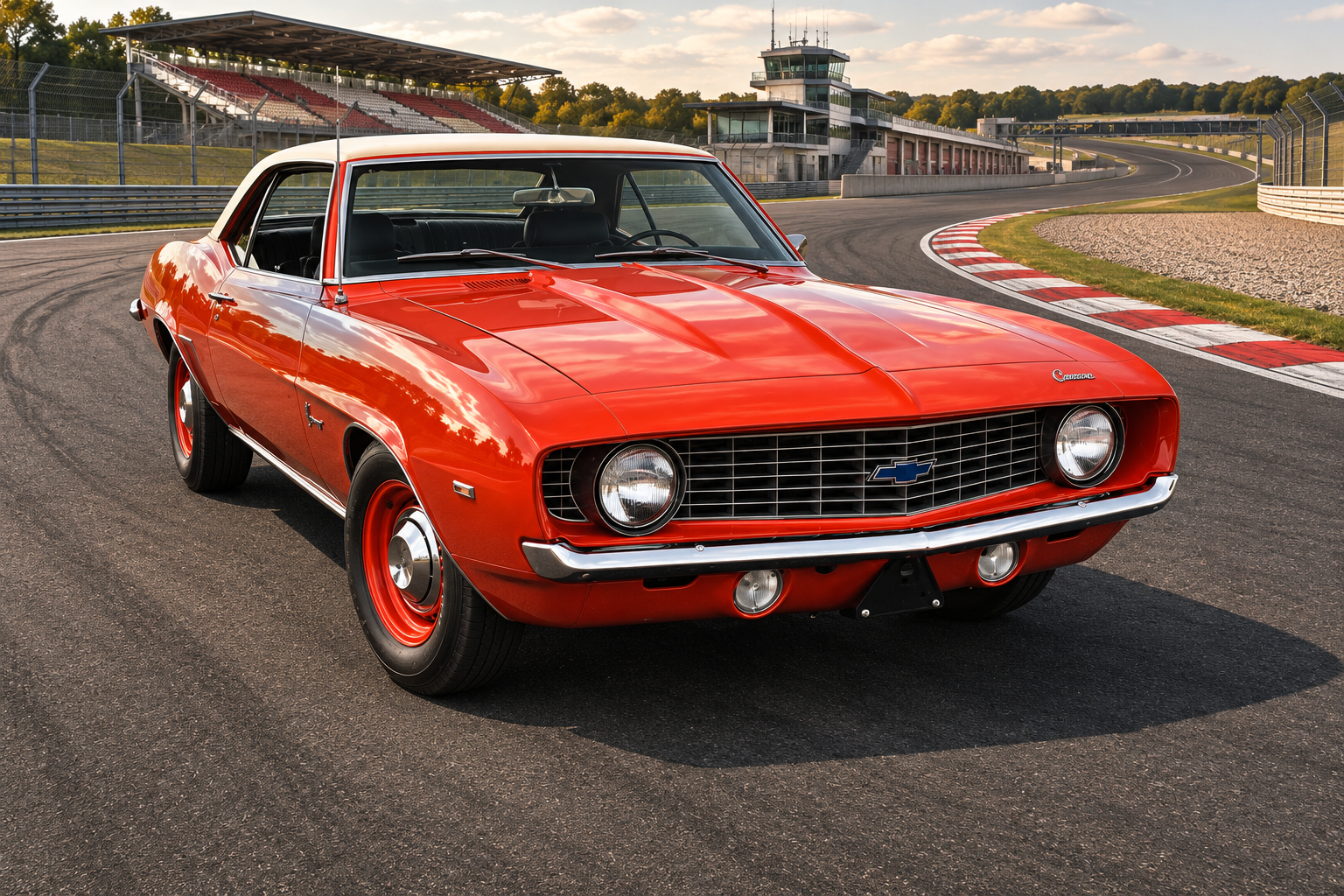
Table of Contents
- Overview and History
- The COPO Loophole
- Fred Gibb and Dick Harrell
- The All-Aluminium 427
- The Horsepower Rating
- What Else Came with COPO 9560
- Transmissions and Drivetrain
- Why They Did Not Sell
- COPO 9561 – The Other 427
- Production and the 69 Cars
- Authenticating a ZL1
- Values and the Market
- Key Features Summary
- Full Specifications Table
Overview and History
1969 was the final year of first-generation Camaro production, and the year Chevrolet’s performance programme reached its most extreme expression – not through the regular option book, but around it.
A GM corporate edict forbade Chevrolet from installing engines larger than 400 cubic inches in the Camaro. Enthusiasts knew the largest Regular Production Option engine available was the 396. Dealers who wanted more were installing 427s themselves – Don Yenko most prominently – which was expensive, inconsistent, and left the cars without factory warranty coverage.
The solution was the Central Office Production Order system, a mechanism intended for fleet and special orders that allowed a dealer to request a factory-built configuration outside the normal catalogue. Two COPO numbers were offered in the 1969 model year: 9560 and 9561.
COPO 9560 used an all-aluminium 427 called the ZL-1 and was designed specifically for drag racing. A total of 69 ZL-1 Camaros were produced, and they are the most valuable Camaros in existence.
The COPO Loophole
Understanding COPO is essential to understanding the car.
The Central Office Production Order system existed so that fleet customers – taxi companies, police departments, utilities – could order configurations the standard option book did not cover. It was an administrative channel, not a performance programme.
Chevrolet performance staff recognized that it could be used to specify a 427 in a Camaro without violating the letter of the corporate displacement rule, because a COPO order was not a Regular Production Option. The engine never appeared in any catalogue.
This had a practical consequence that still matters: the option code was not printed in any Camaro order guide. The COPO programme was not advertised to the public, and only a handful of dealers knew COPO 9560 existed. That obscurity is one of the main reasons so few were built.
Fred Gibb and Dick Harrell
The ZL1 Camaro exists because of two individuals.
The package was conceived by drag racer Dick Harrell and ordered through Fred Gibb Chevrolet of La Harpe, Illinois, specifically for NHRA Super Stock racing.
NHRA homologation rules required a minimum number of cars to be built for a configuration to be eligible. Gibb used the COPO 9560 code to order a fleet of 50 ZL1-equipped Camaros – the minimum required – and in one transaction made the ZL1 legal as a production car.
The first cars shipped quickly. Two were sent to Fred Gibb Chevrolet on New Year’s Eve, 1968, and were then forwarded to Dick Harrell’s Performance Center in Kansas City, Missouri to be prepared for the 1969 Winternationals in Phoenix, Arizona.
Other dealers ordered a further 19 cars, bringing the total to 69.
The All-Aluminium 427
The ZL1 engine is the reason the car matters. It is an all-aluminium 427 cu in (7.0 L) V8 with steel cylinder liners, L88-style cylinder heads, and a single 780-cfm Holley four-barrel carburetor.
Its construction was extraordinary for a production engine. Each engine took 16 hours of hand assembly at Tonawanda, in a room that Corvette chief engineer Zora Arkus-Duntov described as “surgically clean”. All ZL1 engines were manufactured at the Tonawanda Assembly Plant before being installed in Corvettes and Camaros, or sold over the counter to racers.
The aluminium block saved substantial weight over the cast-iron 427 – a decisive advantage in drag racing, where weight transfer and total mass govern elapsed times. Camaro ZL1s weighed in at right around 3,400 pounds.
The same engine appeared in the Corvette as RPO ZL1, where only two were built for 1969 – making the Camaro, at 69 cars, the ZL1’s primary application.
The Horsepower Rating
Chevrolet rated the ZL1 at 430 hp (SAE gross) at 5,200 rpm and 450 lb-ft at 4,400 rpm.
That figure is not what the engine made. Real output is widely reported as well above 500 hp, and the quoted figure was measured well below peak rpm, with actual peak output reported around 500 horsepower or more.
The under-rating served the usual purposes – insurance classification and racing class placement – and it followed exactly the pattern Chevrolet had used with the L88 Corvette, which was quoted at 430 hp while producing substantially more.
For a buyer the practical point is simple: the catalogue number is meaningless as a measure of the car, and should be understood as a deliberate understatement rather than an engineering specification.
What Else Came with COPO 9560
The ZL1 was not simply an engine swap. The cars were built to a specification suited to their purpose.
A ZL1 Camaro started as a 396 SS body and received:
- The F41 heavy-duty suspension
- The ZL2 cowl-induction hood, functional rather than decorative
- Heavy-duty front springs
- Heavy-duty front brakes – disc brakes
- A heavy-duty four-core radiator with a curved neck
- Transistorized ignition
- A high-performance rear end – 12-bolt Positraction with 4.10:1 gears, reported as standard on all 69 cars
- Beefed-up axles
The starting point matters for identification: because the cars began as SS bodies, a ZL1 carries SS structural and trim characteristics beneath its COPO specification.
Oddities exist. One documented car’s 427 lacked the curved-neck radiator and came with a different-size flywheel than specified in the standard reference source – a reminder that with 69 hand-ordered cars, variation is part of the story rather than evidence against a car.
Transmissions and Drivetrain
A detail that surprises people: most ZL1 Camaros were automatics.
Of the 69 cars, only twelve were ordered with the heavy-duty four-speed manual gearbox – sometimes specified with M21 close ratios. All the others came with the Turbo Hydramatic three-speed automatic.
That reflects their purpose. These were drag cars, and a well-prepared automatic delivers more consistent launches than a manual in Super Stock competition. The enthusiast assumption that a serious drag car must have a manual does not hold here.
The rear axle was a 12-bolt Positraction unit with 4.10:1 gears, with one report indicating this was standard across all 69 cars.
Why They Did Not Sell
The ZL1 is a commercial failure that became a legend, and the reasons are worth setting out plainly.
The price. COPO 9560 added $4,160 to the base Camaro – more than the price of the entire car. The finished vehicle cost about $7,200, which put it in Corvette territory and well beyond what any ordinary Camaro buyer would consider.
The obscurity. The COPO programme was not advertised, the option code appeared in no order guide, and only a few dealers knew it existed.
The car itself. A ZL1 was a race engine in a street body – uncompromising, expensive to run, and unsuited to ordinary use.
The outcome was predictable. Fred Gibb Chevrolet could sell only 13 of its 50-car order, and Chevrolet took back the other 37 for wider distribution through other dealers. The final tally of 69 cars produced was, as it happens, an auspicious number for a 1969 model.
COPO 9561 – The Other 427
It is important not to confuse the two 1969 COPO Camaros, since both carry 427s but they are very different cars.
COPO 9560 is the ZL1, with the all-aluminium 427 – 69 cars.
COPO 9561 used the cast-iron L72 427, rated at 425 hp. It was built in considerably larger numbers and is the basis of the Yenko Camaros, which Don Yenko ordered through the same channel and then badged and sold through his own dealership.
Both are genuinely significant cars, but the ZL1’s aluminium block, 16-hour hand assembly, and 69-car production put it in an entirely different category of rarity and value. A car described simply as a “COPO Camaro” is far more likely to be a 9561 than a 9560.
Production and the 69 Cars
The numbers:
- 69 production cars built under COPO 9560
- Two prototypes additionally recorded by some sources
- Fred Gibb ordered 50; other dealers ordered 19
- Gibb sold only 13; Chevrolet took back 37 for wider distribution
- 12 cars with the heavy-duty four-speed; the remaining 57 with Turbo Hydramatic
- Approximately 3,400 pounds curb weight
Because the run is so small, individual cars are tracked by number – examples are routinely described as “#9 of 69”, “#36 of 69”, “#53 of 69”, and so on. That level of individual documentation is unusual and is a direct consequence of the tiny production figure.
Authenticating a ZL1
With values in the hundreds of thousands and a production run of 69, authentication is the entire transaction.
The references that matter:
- The COPO 9560 order trail – documentation showing the car was ordered through the Central Office Production Order system
- The car’s place in the known VIN records of all 69 cars, which the specialist market treats as the baseline for authenticity
- Engine casting numbers and suffix codes confirming an aluminium ZL1 block with steel liners
- The 12-bolt Positraction rear axle with 4.10:1 gears
- COPO-specific equipment – functional ZL2 cowl hood, four-core radiator, transistorized ignition, heavy-duty front brakes
- Published reference material, with COPO Connection by Ed Cunneen treated as the standard source on the ZL1
Because every one of the 69 cars is known and recorded, a claimed ZL1 that does not appear in those records is not a ZL1. That is an unusually clean authentication position compared with most muscle cars, and it should be used.
Equally, be aware that genuine cars show variation – the documented example with no curved-neck radiator and a non-standard flywheel size demonstrates that hand-ordered cars deviate from the reference books.
Values and the Market
The ZL1 sits at the very top of the Camaro market and among the most valuable American muscle cars of any kind.
Auction results give the picture. A correctly restored, highly documented example – #9 of the 69-car run – sold for $451,000. Another, #53 of 69 with the four-speed, sold for $305,000. Values have moved considerably since.
The market distinguishes sharply between the twelve four-speed cars and the fifty-seven automatics, and between cars with complete documented histories and those with gaps.
The ZL1’s legacy also runs forward. Chevrolet revived the name for the fifth-generation Camaro ZL1 unveiled at the 2011 Chicago Auto Show, and in 2012 relaunched the COPO Camaro as a factory-built NHRA Stock Eliminator – of which, in direct homage, 69 were built.
Key Features Summary
- Production: 69 cars built under COPO 9560; some sources add two prototypes
- Reason for Existence: A GM edict forbade engines over 400 cu in in the Camaro; COPO bypassed it
- Conceived By: Drag racer Dick Harrell, ordered through Fred Gibb Chevrolet of La Harpe, Illinois
- Purpose: NHRA Super Stock racing; Gibb ordered 50 to meet homologation minimums
- Engine: All-aluminium 427 cu in V8 with steel cylinder liners, L88-style heads, single 780-cfm Holley
- Assembly: 16 hours of hand assembly per engine at Tonawanda, in a room Duntov called “surgically clean”
- Rated Output: 430 hp @ 5,200 rpm, 450 lb-ft @ 4,400 rpm – real output widely reported above 500 hp
- Option Price: $4,160 – more than the price of a base Camaro; finished cars about $7,200
- Equipment: F41 suspension, functional ZL2 cowl hood, HD front springs and brakes, four-core radiator, transistorized ignition
- Rear Axle: 12-bolt Positraction with 4.10:1 gears
- Transmission: Only 12 with the heavy-duty four-speed; the rest Turbo Hydramatic
- Weight: approximately 3,400 lbs
- Sales: Gibb sold only 13 of 50; Chevrolet took back 37
- Not to Be Confused With: COPO 9561, which used the cast-iron L72 427 and underpins the Yenko Camaros
The 1969 Chevrolet Camaro ZL1 Specs
| ORDER AND ORIGIN | |
| Manufacturer | Chevrolet (General Motors) |
| Order Code | COPO 9560 – Central Office Production Order |
| Reason for COPO | GM edict forbade engines over 400 cu in in the Camaro |
| Catalogue Status | Option code not printed in any Camaro order guide; not advertised publicly |
| Conceived By | Drag racer Dick Harrell |
| Ordering Dealer | Fred Gibb Chevrolet, La Harpe, Illinois |
| Purpose | NHRA Super Stock racing |
| Homologation | Gibb ordered 50 – the NHRA minimum |
| Base Body | 396 SS |
| Model Year Context | Final year of first-generation Camaro production |
| ENGINE – ZL1 427 | |
| Displacement | 427 cu in (7.0 L) |
| Block and Heads | All aluminium, with steel cylinder liners |
| Cylinder Heads | L88-style |
| Carburetor | Single 780-cfm Holley four-barrel |
| Rated Horsepower | 430 hp (SAE gross) @ 5,200 RPM |
| Rated Torque | 450 lb·ft @ 4,400 RPM |
| Actual Output | Widely reported well above 500 hp |
| Rating Note | Quoted figure taken well below peak rpm |
| Assembly | 16 hours hand assembly per engine |
| Plant | Tonawanda Assembly Plant |
| Assembly Room | Described by Zora Arkus-Duntov as “surgically clean” |
| Other Applications | Corvette (2 built in 1969); sold over the counter to racers |
| COPO 9560 EQUIPMENT | |
| Suspension | F41 heavy duty; heavy-duty front springs |
| Hood | ZL2 cowl induction – functional |
| Front Brakes | Heavy-duty discs |
| Radiator | Heavy-duty four-core with curved neck |
| Ignition | Transistorized |
| Rear Axle | 12-bolt Positraction, 4.10:1 gears – reported standard on all 69 |
| Axles | Beefed up |
| TRANSMISSION | |
| Four-Speed Manual | 12 cars – heavy duty, sometimes with M21 close ratios |
| Turbo Hydramatic | All remaining cars – the majority |
| Reasoning | Automatics give more consistent Super Stock launches |
| WEIGHT AND PRICING | |
| Curb Weight | approximately 3,400 lbs |
| COPO 9560 Option Cost | $4,160 over base Camaro price |
| Approximate Finished Price | $7,200 |
| Comparison | Option alone cost more than a complete base Camaro |
| PRODUCTION AND SALES | |
| Production Cars | 69 |
| Prototypes | Two additionally recorded by some sources |
| Fred Gibb Order | 50 cars |
| Other Dealers | 19 cars |
| Sold by Gibb | 13 |
| Returned to Chevrolet | 37, redistributed to other dealers |
| First Deliveries | Two cars to Fred Gibb on New Year’s Eve, 1968 |
| Prepared By | Dick Harrell’s Performance Center, Kansas City, Missouri |
| First Race | 1969 Winternationals, Phoenix, Arizona |
| COPO 9561 – THE OTHER 427 (for comparison) | |
| Engine | Cast-iron L72 427 |
| Rated Output | 425 hp |
| Volume | Considerably higher than the ZL1 |
| Association | Basis of the Yenko Camaros |
| AUTHENTICATION | |
| Primary Reference | COPO 9560 order trail |
| Baseline | The car’s place in the known VIN records of all 69 cars |
| Engine Check | Aluminium block with steel liners; casting numbers and suffix codes |
| Equipment Check | Functional ZL2 hood, four-core radiator, transistorized ignition, HD front brakes, 12-bolt 4.10 Positraction |
| Standard Reference Source | COPO Connection by Ed Cunneen |
| Variation Note | Genuine cars deviate – one documented example lacks the curved-neck radiator and has a different flywheel size |
| MARKET | |
| Auction Example | #9 of 69, restored and documented – $451,000 |
| Auction Example | #53 of 69, four-speed – $305,000 |
| Market Distinction | Four-speed cars (12) versus automatics (57); documentation completeness |
| LEGACY | |
| Name Revived | Fifth-generation Camaro ZL1, unveiled at the 2011 Chicago Auto Show |
| COPO Relaunch | 2012 factory-built NHRA Stock Eliminator – 69 built in homage |
1969 Chevrolet Camaro ZL1 – Frequently Asked Questions
Why was the ZL1 ordered through COPO rather than the option book?
Because a GM corporate edict forbade Chevrolet from installing engines larger than 400 cubic inches in the Camaro – the largest Regular Production Option engine was the 396. The Central Office Production Order system existed for fleet and special orders and was not a Regular Production Option, so specifying a 427 through it did not breach the letter of the rule. The option code appeared in no Camaro order guide and was never advertised publicly.
How many ZL1 Camaros were built?
69 production cars under COPO 9560, with some sources additionally recording two prototypes. Fred Gibb Chevrolet ordered 50 – the NHRA homologation minimum – and other dealers ordered 19. Gibb managed to sell only 13, and Chevrolet took back the other 37 for wider distribution. The final tally of 69 was an auspicious number for a 1969 model.
What makes the ZL1 engine special?
It is an all-aluminium 427 with steel cylinder liners, L88-style cylinder heads, and a single 780-cfm Holley four-barrel. Each engine took 16 hours of hand assembly at Tonawanda, in a room Corvette chief engineer Zora Arkus-Duntov described as “surgically clean”. The aluminium block saved substantial weight over the cast-iron 427, which was decisive in drag racing.
Was it really only 430 horsepower?
No. Chevrolet rated it at 430 hp at 5,200 rpm with 450 lb-ft at 4,400 rpm, but that figure was taken well below peak rpm and real output is widely reported well above 500 hp. The under-rating served insurance and racing-classification purposes, following exactly the pattern Chevrolet had used with the L88 Corvette.
Why did most ZL1s have automatics?
Because they were built to race. Of the 69 cars, only twelve were ordered with the heavy-duty four-speed manual; all the others came with the Turbo Hydramatic three-speed automatic. In Super Stock competition a well-prepared automatic delivers more consistent launches than a manual, so the automatic was the deliberate choice rather than a compromise.
What is the difference between COPO 9560 and COPO 9561?
The engine. COPO 9560 is the ZL1, with the all-aluminium 427 – 69 cars. COPO 9561 used the cast-iron L72 427 rated at 425 hp, was built in considerably larger numbers, and is the basis of the Yenko Camaros. Both are significant, but the ZL1’s aluminium block and 69-car production put it in a different category entirely. A car described simply as a “COPO Camaro” is far more likely to be a 9561.
Why did the ZL1 fail commercially?
Price and obscurity. COPO 9560 added $4,160 to the base car – more than the price of a complete Camaro – bringing the finished vehicle to about $7,200, which was Corvette territory. The option was never advertised, appeared in no order guide, and was known to only a handful of dealers. And the car itself was a race engine in a street body, unsuited to ordinary use. Fred Gibb sold only 13 of his 50-car order.
How do I authenticate a ZL1?
Through the COPO 9560 order trail and the car’s place in the known VIN records of all 69 cars, which the specialist market treats as the authenticity baseline. Because every one of the 69 is recorded, a claimed ZL1 that does not appear in those records is not one. Verify the aluminium block and its casting and suffix codes, the 12-bolt 4.10 Positraction axle, and the COPO-specific equipment. COPO Connection by Ed Cunneen is the standard reference source – though note that genuine cars do show variation from the books.
