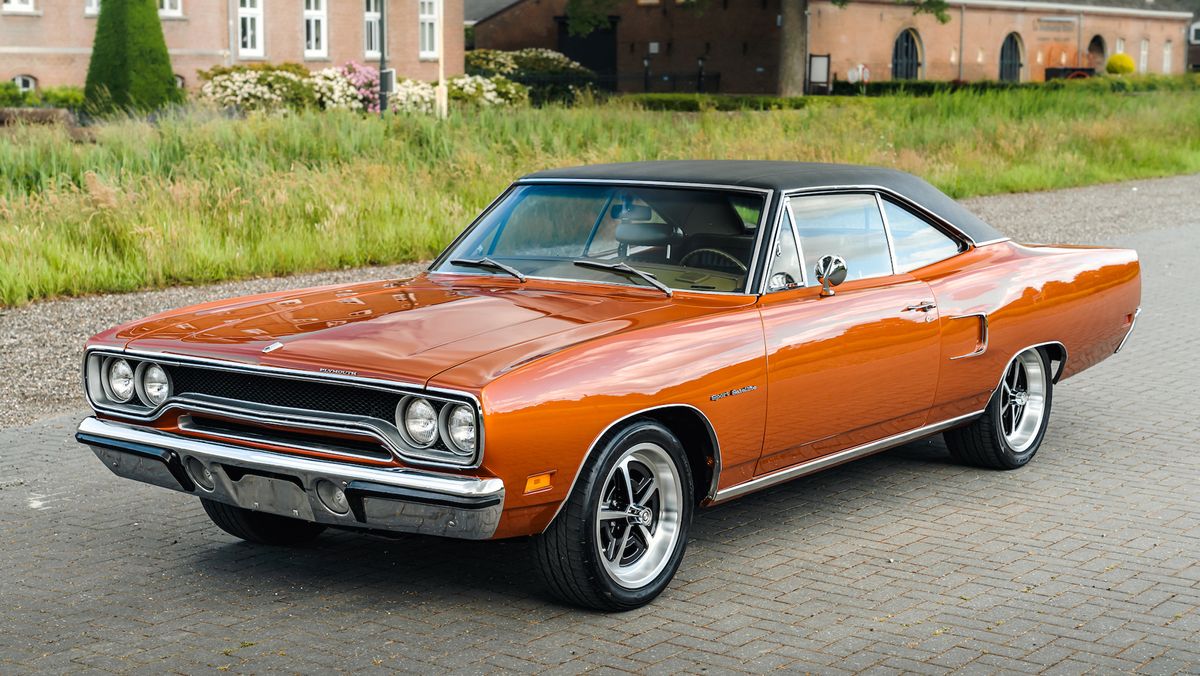
The 1970 Plymouth Satellite is a classic mid-size American car, known for its versatile body styles, powerful V8 engine options, and iconic 1970s design, making it a prized collector’s muscle car today.
Overview and History
The Plymouth Satellite, built on Chrysler’s B-body platform, was part of Plymouth’s mid-size lineup, positioned above the Belvedere as an upscale option. The 1970 model falls in the second generation of Satellites (1968–1970) and was produced before the Belvedere name was retired. In 1970, Plymouth manufactured approximately 82,600 Satellites, with around 28,200 being 2-door hardtops. The Satellite shared its basic chassis with the Road Runner, Dodge Charger, and Coronet models, and was often seen as a balance between performance and comfort.
Body Styles and Design
The 1970 Satellite was offered in these body styles:
- Two-door hardtop: Sportier, often favored by enthusiasts.
- Four-door sedan: More practical, family-friendly option.
Curb appeal highlighted a boxy, slab-sided profile, rectangular headlights, a long hood, horizontal taillights, and distinct Plymouth badging. Two-tone paint schemes, chrome trim, and vinyl roofs were popular finishing touches.
Engine Options
The 1970 Satellite offered a wide range of engines, accommodating both daily driving and muscle car performance:
- Six-cylinder: 225 Slant-6 for base models.
- Small-block V8s: 273, 318, 340, and 360 cu in for moderate power.
- Big-block V8s: 383, 426 Hemi, and 440 Magnum for higher performance.
Power output ranged roughly from 230 hp to 440 hp, with the 440 Magnum delivering true muscle car acceleration.
Transmission Options
Multiple transmission types allowed buyers to match engine performance with driving preference:
- 3-speed manual
- 4-speed manual (rare with high-performance V8s)
- 3-speed TorqueFlite automatic for smoother cruising, especially with large V8s
Special Trims and Variants
- Sport Satellite: Offered sporty design cues including blacked-out grilles and chrome side accents.
- GTX: Essentially a dressed-up Satellite with the 440 V8 and luxury touches, often called the “gentleman’s” performance car.
- Sebring trims: Featured higher-end interior finishes and optional performance engines.
Performance and Features
- Acceleration: 0-60 mph roughly in under 7 seconds for top V8s.
- Top speed: Approximately 120 mph depending on engine.
- Suspension: Front torsion bars, rear leaf springs for responsive handling.
- Available features: Power steering, dual exhausts, factory gauges, AM push-button radio, bucket seats in sport models.
Collector Value and Market
As of recent listings, 1970 Plymouth Satellites range from $9,395 for project cars to over $100,000 for pristine, numbers-matching examples. Factors influencing value include:
- Engine and transmission combination
- Overall condition and originality
- Rare trims like Sport Satellite or GTX
- Market demand and geographic location
Some examples, such as numbers-matching Sport Satellites with 383 V8s and show-quality restoration, are considered top-tier collector vehicles and consistently appreciate in value.
Cultural Presence
The 1970 Satellite has appeared in popular culture, including TV shows like Adam-12 and films such as Smokey and the Bandit, reflecting its era as a practical yet performance-capable sedan. Collectors appreciate its blend of muscle car performance and mid-size practicality.
In summary, the 1970 Plymouth Satellite is a quintessential 1970s American mid-size car, noted for its engine versatility, distinctive styling, and place in the muscle car era. Whether as a showpiece, collector car, or weekend cruiser, it continues to attract enthusiasts seeking classic Mopar performance and style.
The 1970 Plymouth Satellite Specs
| Body | |
|---|---|
| Body Maker | Plymouth |
| No. Of Doors | 2 |
| Model Number | RH23 |
| Dimensions | |
| Length | 203.8 inches |
| Width | 76.4 inches |
| Height | 53 inches |
| Wheelbase | 116 inches |
| Weight | 3,055 lbs |
| Engine | |
| Type | Slant 6, overhead valve, single downdraft, fully synchronized |
| Displacement | 225.54 cu. in. |
| Cylinders | 6 |
| Bore and Stroke | 3 13/32 & 4 1/8 inches |
| Compression Ratio (Standard) | 8.4 to 1 |
| Horsepower (Brake) | 145 @ 4000 |
| Horsepower (Rated) | 27.85 |
| Torque | 215 @ 2400 |
| Main Bearings | 4 |
| Valve Lifters | Mechanical |
| Block Material | Cast Iron |
| Engine Number Location | Stamped on joint face at right corner, adjacent to number 1 cylinder bore |
| Lubrication | Pressure to all bearings excluding wrist pin |
| Carburetor Make | Holley |
| Transmission | |
| Drive | Rear wheel drive |
| Clutch Type | Single plate dry disc |
| Clutch Size | 9.25 inches |
| Gear Ratios (1st) | 3.08 |
| Gear Ratios (2nd) | 1.76 |
| Gear Ratios (3rd) | 1 : 1 |
| Gear Ratios (4th) | Not applicable |
| Gear Ratios (5th) | Not applicable |
| Gear Ratios (Reverse) | 3.95 |
| Axle | |
| Type | Semifloating |
| Differential Type | Hypoid |
| Differential Ratio | 3.23 to 1 |
| Suspension | |
| Front | Independent torsion bar |
| Rear | Hotchkiss |
| Brakes | |
| Service Type | Hydraulic, self-adjusting drums |
| Service Front Size | 10 inches |
| Service Rear Size | 10 inches |
| Emergency Type | Rear service brakes |
| Emergency Size | 10 inches |
| Fuel | |
| Type | Regular |
| Wheels & Tires | |
| Tire Size | F78 x 14 |
| Spare Location | Trunk |
| Capacities | |
| Fuel | 19 Gallons |
| Oil | 4 Quarts |
| Rear Differential | 2 Pints |
| Front Differential | Not applicable |
| Transfer Case | Not applicable |
| VIN / ID | |
| Serial Number | Starting RH23B0A100001 |
| Total Digits | 13 |
| Digits 1–2 | Series |
| Digits 3–4 | Body style |
| Digits 5 | Engine |
| Digits 6 | Model year |
| Digits 7 | Assembly plant |
| Digits 8–13 | Production number |
| Exterior Colors | |
| All colors may not be available in all models. Silver Metallic, Ice Blue Metallic, Blue Fire Metallic, Jamaica Blue Metallic, In Violet Metallic, Rally Red, Lime Green, Ivy Green, Lime Light Metallic, Vitamin C, Burnt Orange Metallic, Deep Burnt Orange Metallic, Sand Pebble Beige, Frosted Teal Metallic, Scorch Red, Sahara Tan Metallic, Burnt Tan Metallic, Tor-Red, Alpine White, Black Velvet, Lemon Twist, Sunfire Yellow, Yellow Gold, Citron Mist Metallic, Citron Gold Metallic | |
| Optional Equipment | |
| Hardtop | Opt |
| Torque Flite Automatic Transmission | Opt |
| Power Windows | Opt |
| Air Conditioning | Opt |
| Power Brakes | Opt |
| Power Steering | Opt |
| Radio | Opt |
| Front Disc / Rear Drum Brakes | Opt |